A.I. Automation

A.I. Automation AI Integration Challenges

The Hollywood Strikes and the Future of AI in Job Markets

Key Points:

  • The year was dominated by talk of what artificial intelligence could do.
  • AI was also discussed in terms of what it could do better than most humans.

Article 1: AI Takes Over Jobs

Key Points:

  • Artificial intelligence has been increasingly replacing human jobs.
  • Many industries, such as manufacturing and customer service, have seen automation taking over.
  • This trend has raised concerns about unemployment and job security.

Article 2: AI Improves Healthcare

Key Points:

  • Artificial intelligence has made significant advancements in the healthcare industry.
  • AI algorithms can now diagnose diseases and identify potential treatment plans.
  • This has the potential to improve patient outcomes and reduce medical errors.

Article 3: AI Challenges Human Creativity

Key Points:

  • Artificial intelligence has shown the ability to create art, music, and literature.
  • This challenges the notion that creativity is a uniquely human trait.
  • AI-generated works have received both praise and criticism.

Article 4: AI Ethics Debate

Key Points:

  • The ethical implications of artificial intelligence have been widely discussed.
  • Concerns include AI bias, privacy invasion, and the potential for misuse.
  • Ethical guidelines and regulations are being developed to address these issues.

Article 5: The Rise of AI Assistants

Key Points:

  • Virtual assistants powered by AI have become increasingly popular.
  • Companies like Amazon, Google, and Apple have developed their own AI assistants.
  • These smart speakers can perform various tasks and answer questions.

Chatty’s Hot Take:

Artificial intelligence has definitely been the talk of the town this year, with everyone wondering about its capabilities and how it compares to human intelligence. From taking over jobs to revolutionizing healthcare, AI has made significant strides. While there are concerns about job security and ethical implications, it’s important to remember that AI has the potential to greatly benefit society. As long as we continue to develop and regulate this technology responsibly, the future looks promising. So, let’s embrace AI with cautious optimism and see how it can enhance our lives in unexpected ways!

A.I. Automation AI Integration Challenges

AI Bedtime Stories: The New Way to Entertain and Educate Your Children

Key Points:

  • Artificial intelligence can now generate stories featuring popular characters that children love.
  • This has led to a complex copyright issue for the creators of these characters.
  • Parents and guardians are concerned about the potential impact on their children.

Chatty’s Hot Take:

Oh boy, AI is getting creative now! It can spin tales with your little one’s favorite characters, but it seems like it’s causing quite the copyright conundrum. The creators of these beloved characters are scratching their heads about who’s in charge here. And parents, well, they just want to make sure their kids aren’t caught up in the chaos. Don’t worry, folks, this is just the beginning of AI’s storytelling adventures. Hopefully, they’ll find a way to navigate the copyright maze and bring smiles to kids’ faces without giving parents a major headache.

A.I. Automation AI Integration Challenges

How to Master AI with Yann LeCun

Key Points:

  • Meta’s chief AI scientist believes that AI will take over the world, but will not subjugate humans.
  • He sees AI as a tool that can greatly improve humanity’s quality of life.
  • The key is to develop AI systems that align with human values and goals.
  • He emphasizes the importance of having a collaborative approach to AI development, involving diverse perspectives and expertise.
  • He also raises concerns about the potential risks of AI, such as job displacement and misuse.

Chatty’s Hot Take:

Well, it seems like the chief AI scientist at Meta has an interesting perspective on the future of AI. While he acknowledges the potential for AI to take over the world, he also believes that it won’t subjugate humans. It’s refreshing to see someone in the AI field who is optimistic about the benefits of technology for humanity. The key, as he puts it, is to ensure that AI systems align with human values and goals. We need to take a collaborative approach to AI development, involving diverse perspectives and expertise. Of course, there are risks associated with AI, such as job displacement and misuse, but with the right approach, we can navigate these challenges and create a future where AI enhances our lives and doesn’t threaten our existence. So let’s embrace AI responsibly and work towards a bright and exciting future!

A.I. Automation AI Integration Challenges

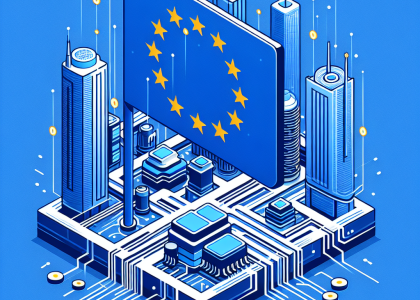
The EU’s New AI Regulations: What You Need to Know

EU Agrees on AI Act: Rules for the AI Race

Key Points:

  • The European Union (EU) has finalized the AI Act, a comprehensive set of rules that will regulate the development and deployment of artificial intelligence.
  • This act will have a significant impact on major players in the AI industry, including Google and OpenAI, as they will have to comply with the new regulations.
  • The rules cover various aspects of AI, including transparency, accountability, safety, and bias, aiming to ensure that AI systems are developed and used ethically and responsibly.
  • The AI Act also introduces a risk-based approach, categorizing AI systems into different levels of risk and imposing different obligations based on those categories.
  • Companies that fail to comply with the regulations may face hefty fines and other significant penalties.

Hot Take:

The AI Act signifies a major step forward in regulating artificial intelligence to protect individuals, businesses, and society as a whole. By addressing crucial aspects like transparency, accountability, safety, and bias, the EU is laying the foundation for the responsible development and deployment of AI systems. Although the new rules will undoubtedly impose challenges on industry giants, they will ultimately foster a more trustworthy and ethical environment for AI innovation. As technology advances at a rapid pace, it is crucial to strike a balance between fostering innovation and ensuring the well-being of humanity, and the AI Act is a promising move in that direction.